Tattoo Removal Before and After


Wednesday, December 4, 2019

no image

Tattoo Removal Methods and Choices

Tatto removal methods and choices

The days of permanent tattoos are behind us. Tattoos can now be easily removed with modern machines and a variety of treatments. While all these treatment types may be effective to one degree or another, we should always trust professionals with ample experience and the latest technologies.

By far, the most popular form of tattoo removal now used is laser treatment. These treatments remove tattoos by breaking up the ink particles under the skin (in the second layer), with the body then removing them in a natural way through its lymphatic system. Interestingly, when ink is injected into the skin the body continually views it as a foreign invader, but because the ink particles are too large the tattoo stays in place. When a laser is used to break up the particles, the ink will be carried away and the tattoo will fade. Several treatment sessions, typically between 5 and 10, are required to enjoy complete tattoo removal with laser (fewer needed if the PFD patch method is used. Visit the PFD patch page for details on shortening your tattoo removal duration).

Other forms of tattoo removal treatment are also available. Some individuals decide to use TCA peels. The goal with these treatments is to use a chemical mixture to dissolve the top layers of skin. Eventually, the ink will be reached and slowly removed. Other options include excision, salabrasion, dermabrasion, and cryosurgery.

In addition to determining the right method to be used to get rid of your tattoo, you will also need to make decisions regarding the safety and success of each method. One thing that may help determine this is the color of the ink to be removed. Our state-of-the-art Astanza Trinity laser covers the full color spectrum safely and in fewer treatments. The Astanza Trinity laser is used and trusted by leading laser tattoo removal practices worldwide, including our Las Vegas Tattoo Removal location.

You may be wondering how much pain a person should expect to when they have a tattoo removed by laser. It's no secret that laser treatment, as any tattoo removal treatment type, can cause discomfort mostly during the treatment itself. Some use a numbing cream to minimize pain, though we have found that chilling the area during treatment with our Zimmer Cryo unit has as much effect or even more.

We can take certain steps in order to assist your body in removing the ink particles after a laser treatment. Living an overall healthy lifestyle and not smoking can go a long way in helping you to have a healthy immune system. This will help your body process the ink particles more quickly. Being at a healthy weight, getting enough sleep, staying hydrated, and eating a healthy diet are all helpful things that you can do. Check out our laser tattoo removal aftercare guide for ways to care for additional information.

Many people had their tattoos applied with the idea that they would have them forever. But many of us who get tattoos regret one or more eventually. We may be disappointed with the way the tattoo turned out or no longer like the idea that the tattoo represents. We may even feel embarrassed by a tattoo, especially if it has stretched or faded over time. Thankfully, this tattoo regret can be a thing of the past. Tattoos are no longer permanent!

For your free tattoo removal consultation, contact reSkin for an experienced and reputable evaluation and proposed treatment plan. We would be pleased to be your Las Vegas tattoo removal provider.

Information contained on this page is provided by an independent third-party content provider. Frankly and this Site make no warranties or representations in connection therewith. If you are affiliated with this page and would like it removed please contact pressreleases@franklymedia.com

Tuesday, December 3, 2019

no image

10 Celebrity Couples Who Got Matching Tattoos You'll Want To Copy

If seeing the "Offset" tattoo on Cardi B's thigh makes you next-level nervous, welcome to the club. Getting a tattoo honoring someone who may or may not be a permanent fixture in your life forever is a big deal — especially when it's personalized, and when you and bae decide to match. It's risky because if you break up, you're both left with permanent skin art that's half an ode to someone you'd probably rather just forget. And tattoo removal? It hurts. If you and your partner are on the fence about getting inked together, these celebrity couples with matching tattoos remind us that the fool-proof tats are subtle, ambiguous, or reflective of something bigger than your current relationship.

"When a couple gets the same tattoo, or even when an individual gets a tattoo that is a marker of the relationship, they're essentially saying 'This is an important relationship for me,'" Viren Swami, a professor at Anglia Ruskin University who studies the psychology around getting tattoos, told The Cut. "'This is an important, meaningful relationship, and I'd like to symbolize it in a way that involves permanence and involves pain.'"

Some of the tattoos these celebrity duos have are ultra-specific. But none of the following tats are the type that would be difficult to cover up or breathe new life into in the event of a breakup. Here are 10 celebrity couples (including former couples) with matching tattoos that will leave you ink-spired to take the plunge and get tatted with your significant other.

1. Beyoncé & JAY-Z

Beyoncé / Instagram

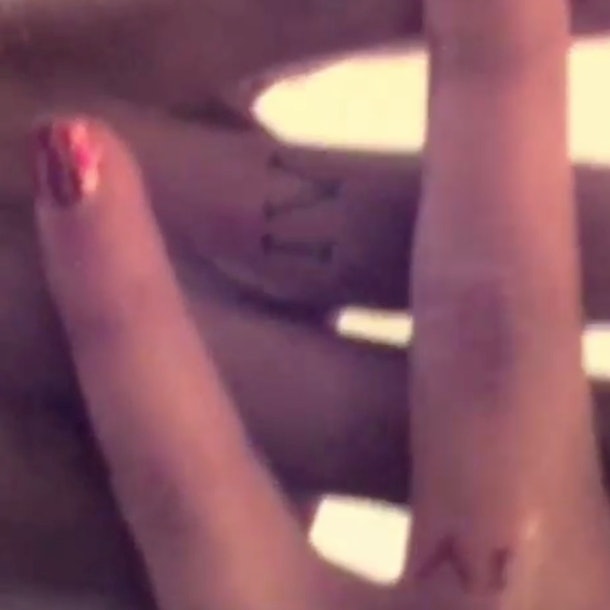
If you're a proud member of the Beyhive, you know the significance of the number four for Beyoncé and JAY-Z: Queen Bey's birthday is on Sept. 4, JAY-Z's birthday is on Dec. 4, the two got married on April 4, and Beyoncé's 2011 album was called 4. On JAY-Z and Beyoncé's ninth wedding anniversary, Beyoncé posted a video to Instagram giving fans a peak into some of their tender relationship moments. This video included footage of the couple getting the Roman numeral for 4, "IV," inked on their fingers.

Apart from their wedding anniversary and their own birthdays, these matching tattoos have even more significance for the couple. The next month, JAY-Z would go on to release his album 4:44. Fans have also noted a possible correlation between the "Ivy" in Blue Ivy and the roman numeral "IV."

2. Miley Cyrus & Liam Hemsworth 3. Khloé Kardashian & Lamar Odom

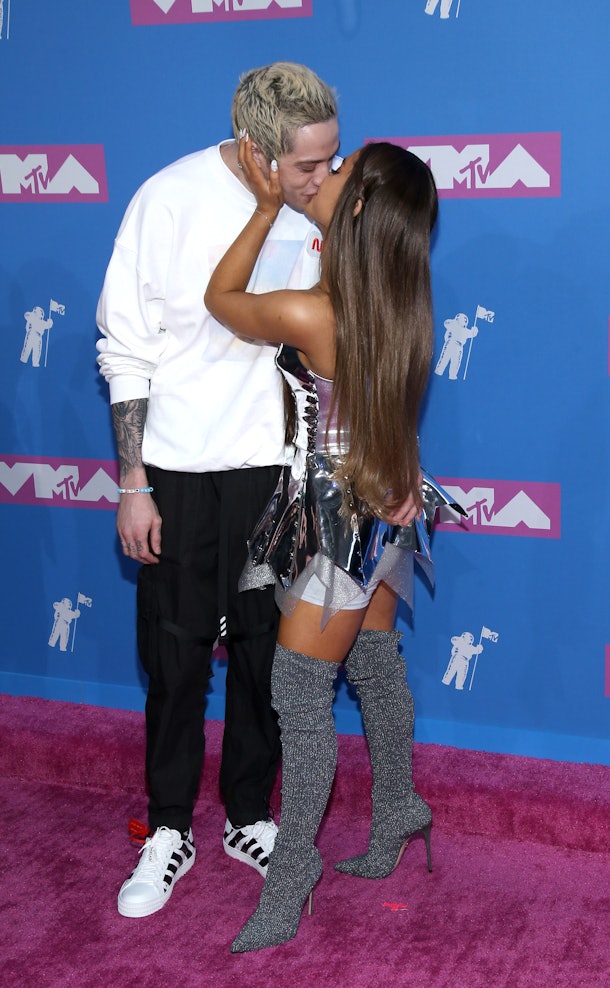
Jim Spellman/WireImage/Getty Images 6. Ariana Grande & Pete Davidson

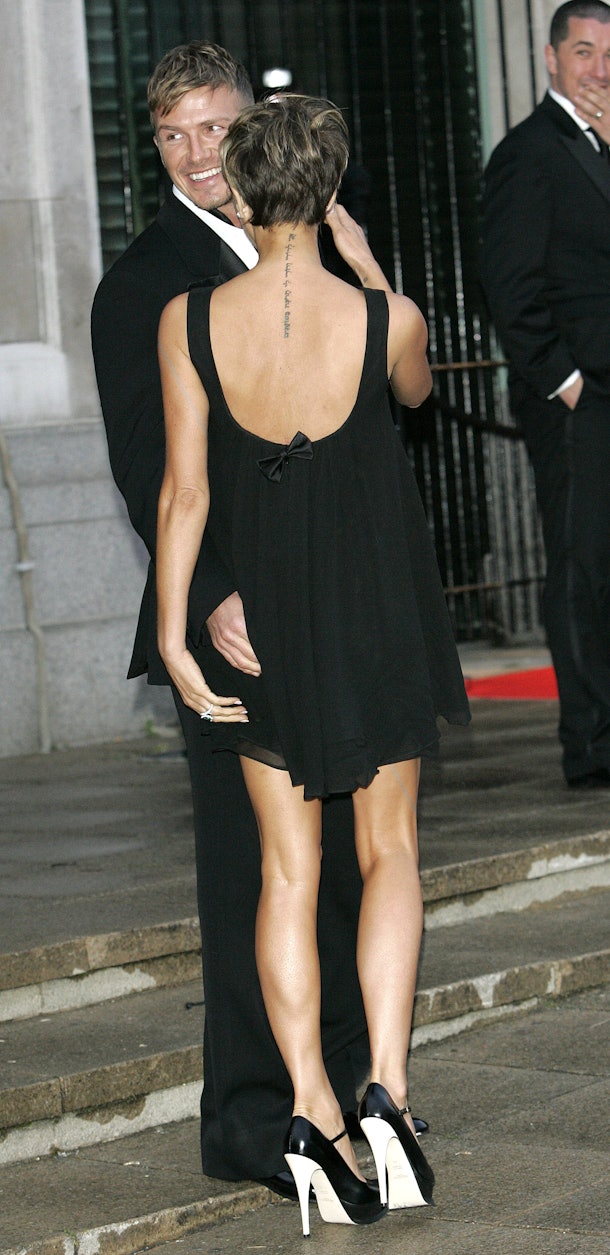
Paul Zimmerman/WireImage/Getty Images 7. Victoria & David Beckham

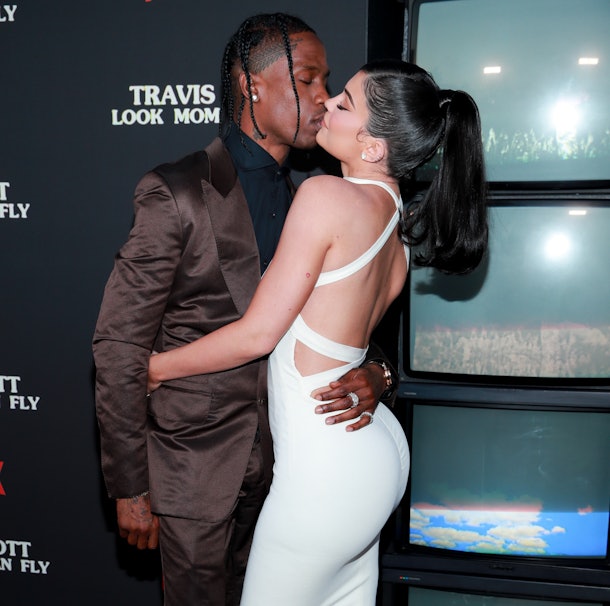
Mark Cuthbert/UK Press/Getty Images 8. Sophie Turner & Joe Jonas 9. Kylie Jenner & Travis Scott

Rich Fury/Getty Images Entertainment/Getty Images 10. Chrissy Teigen & John Legend

And last but not least, America's sexiest parents, Chrissy Teigen and John Legend, got matching tattoos dedicated to their family. In the beautiful, languid script, the two were inked with "John Luna Miles" and "Chrissy Luna Miles," respectively. Similar to Beyoncé and JAY-Z's tats, these are about something bigger than their romantic commitments to each other.

If you're looking for tattoos to get inked with your boo, take cues from these celebrity couples: Opt for something delicate, cute, and meaningful to you two as individuals.

Monday, December 2, 2019

no image

Microblading, powder, ombre — what you need to know about eyebrow tattooing

As the trend of "natural" bushy brows grows, so does the cosmetic tattooing industry.

Microblading, powder, ombre â€" the before and afters are all over social media and selling the promise of brows like actress and model Cara Delevingne.

And if you are after a full look that is beyond your natural reach, it's tempting to get it sorted once and for all (for a couple of years, at least) to avoid a daily brow application.

But it's clear people have received, or at least are concerned about, bad ink jobs.

"How to remove eyebrow tattoo at home?", "How to erase eyebrow tattoo?" and "Can eyebrow tattoo be corrected?" were just some commonly searched questions I found while researching this story.

Here are some things you might like to know before seeking out new inked brows.

How does eyebrow tattooing work?

When cosmetic tattooing first gained traction in the 1980s, it was often performed by body tattooists using regular tattoo tools.

"Most of the tattoos from the early '80s were harsh colours and with fuzzy edged lines that, with time, developed further hazy edge. There was no subtlety in colour or application," says Samantha Eisman, a dermatologist based in East Melbourne.

These days you are more likely to see subtle transformation using techniques known as microblading and microshading.

Should we trust online skincare influencers?

Can we trust online influencers about something as individual as skin? And when is it important to seek out a professional?

Read more

"Body tattoos are permanent as the tattoo ink has bigger particles that don't get cleared by the body," Dr Eisman says.

"With cosmetic tattoos, a pigment rather than an ink is used … and generally does not last for more than five years."

Both are deposited into the layer of skin known as the dermis.

She says the cosmetic tattoo pigments comes in soft colours, allowing for a subtle result.

Eyebrow tattooing requires a minimum of two treatments.

The beauty trend is popular with all nationalities and can also be used for medical reasons, explains Paula Reali, president of the Association of Cosmetic Tattoo.

"It can help people with alopecia … and anyone undergoing cancer treatment can still have it done â€" they just have to be under a doctor's supervision."

Powder or microblading technique? Microblading is a technique that creates brush-like strokes.(Wiki Commons: Antes y Despues)

Microblading, or feathering, is a technique where hair strokes are created by manually etching pigment into the skin.

It's performed by hand with a manual tool and has a softer finish.

Because the pigment is deposited more superficially, it may require more frequent touch ups and is not as suitable for oily skin, Dr Eisman says.

Microshading, or powder and ombre brows, are suitable for all skin types. A digital device is used, creating a more solid and defined look, Dr Eisman says.

Touch-ups are required less often than with microblading.

Some artists use a combination of both techniques.

"Clients should be measured up to suit individual needs â€" don't follow a fashion trend," Ms Reali says.

Healing time and how long it lasts

Eyebrow tattooing takes seven to 10 days to heal, and generally lasts about 18 months to two years, fading over time.

How quickly that happens will depend on genetics, sun exposure, if you exfoliate with retinoids and hydroxy acids, and how oily your skin is, says Dr Eisman.

Your health can also play a role, Ms Reali says.

"If you have people who suffer from immune problems like diabetes, the retention [of the pigment] will be less."

What are the risks of eyebrow tattooing? Eyebrow tattooing means some women no longer have to use make-up to create brows.(Unsplash: Septian Simon)

The main risks associated with eyebrow tattooing are allergic reaction, scarring and infection.

"Anything that breaks the skin can predispose to infection, but reputable tattooists will ensure complete sterile technique and good hygiene as is required by the Department of Health regulations for skin penetration," says Dr Eisman.

A guide on botox

With a growing number of unqualified people offering cosmetic injections, it's important full understand how botox works and what the risks are before getting it.

Read more

To reduce the risk of allergic reaction, she recommends finding out what type of pigment is being used.

"Organic is more likely to cause allergic reaction and fade faster. Inorganic is synthetic, and made from iron and zinc oxide with less chance of allergy," she says.

If you have known allergies you can request a patch test, but some reactions can be delayed.

Swelling and granulomas (reaction to pigment where a mass of tissue forms around a foreign substance) are other associated risks.

Dr Eisman recommends avoiding anti-inflammatory medication (aspirin, ibuprofen, alcohol) one week prior to treatment.

Eyebrow tattooing is not advised while pregnant or breastfeeding, Dr Eisman warns, due to the infection risk, as well as others including skin being more susceptible to pigment darkening during this time.

Who is qualified to perform the procedure?

Billie Kubeil is a cosmetic tattooist from Narre Warren in Victoria.

She says tattooists should be qualified and registered for skin penetration with their local shire.

"Clients should also be able to see their certificates of qualification and insurance. Technicians will not be able to gain insurance without having a certificate of course completion."

She says referrals from others who have used the tech are important because photos on a website can't be verified as their actual work.

ABC Life in your inbox

Get our newsletter for the best of ABC Life each week

The environment is a good indicator of their standards, Ms Kubeil says.

"If a client goes to a clinic or salon and the tattooist is not wearing the appropriate attire and using safe international hygiene standards, they should not go ahead with this procedure.

"Maintaining infection control is extremely important … as we are using needles and penetrating the skin."

After-care advice should be offered, as well as recommendations for hygienic healing products.

"Don't be afraid to ask the questions. Your tattooist should not object to suppling you with this information."

Ms Reali says you can also contact Fair Trading to see if a technician has had complaints.

What you need to know about teeth whitening

Before you sign up for whatever at-home DIY whitening your favourite Instagram celeb is pushing, there are some things you might like to know.

Read more How much does eyebrow tattooing cost?

The average cost for a brow tattoo service is between $600 and $750, says Ms Kubeil.

Ms Reali says it can vary from $400 to $1,500.

"It can depend on their location and therefore rent costs," she says.

Often a service provider will include the follow-up appointment for touch-ups in the total price, but check there isn't an additional cost.

Does eyebrow tattooing hurt?

Accredited cosmetic tattoo technicians use topical anaesthetics, but they need to be supplied by the client as tattoo artists and laser technicians are not authorised to sell or supply scheduled medicines.

The technician can help you organise the sourcing of anaesthetics from a compounding pharmacy.

"The topical anaesthetics work really well. Some people might feel a bit of discomfort, but it's not a pain that's traumatic or one needs to get nervous about."

What if I don't like the result?

Fear of an undesired result is understandable when having something semi-permanent inked on your face.

Dr Eisman advises it's better to start light then go darker if unsure, as removal is tricky.

"Most cosmetic tattoos can be removed with specific tattoo removal lasers but it can be difficult and many treatments may be needed," she says.

"Laser treatment to remove the tattoo come with their own complications."

This is general information only. For detailed personal advice, you should see a qualified medical practitioner who knows your medical history.

Editor's note: Originally this story stated that ink from body tattoos is deposited into a deeper layer of skin than pigment for cosmetic tattoos. They are deposited into the same layer of skin.

Saturday, November 30, 2019

no image

Newsletter: Father Gregory Boyle brings ‘Barking to the Choir’ on Dec. 16

Good morning, and welcome to the Los Angeles Times Book Club newsletter.

Every year 15,000 Angelenos flock to a hive of hustle, reinvention and second chances on the edge of Chinatown, where Father Gregory Boyle runs Homeboy Industries.

From Monday through Friday, former gang members come here to train for new jobs, take shifts in the 24-7 bakery and sign up for GED classes, counseling and tattoo removal. Boyle presides over it all, his office overlooking the headquarters' glass front doors, his day filled with walk-in appointments.

In his second book, "Barking to the Choir," Boyle shares the stories of the people he meets daily. "It's been more than 30 years since I first met Dolores Mission Church as pastor," he writes near the start of the book, "and ultimately came to watch Homeboy Industries, born in that poor, prophetic community in 1988, evolve into the largest gang intervention, rehab and reentry program on the planet.� �

"Barking to the Choir" is the latest L.A. Times Book Club selection. On Dec. 16, Boyle will join the book club for a 9 a.m. breakfast conversation with author Héctor Tobar at the California Endowment center downtown. Get tickets.

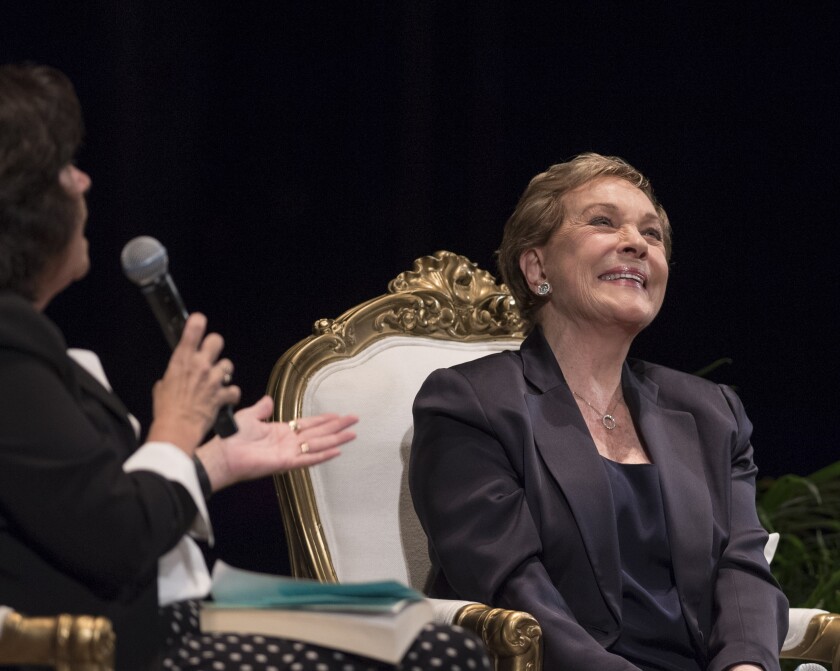
 Julie Andrews shares stories at a forum co-hosted by the Times Ideas Exchange in partnership with the L.A. Times Book Club.

Julie Andrews shares stories at a forum co-hosted by the Times Ideas Exchange in partnership with the L.A. Times Book Club.

(Ana Venegas/For The Times)

Her Hollywood stories

Julie Andrews joined Times readers on Nov. 18 to talk about her new memoir, "Home Work," and early Hollywood career.

"Hello, book club people!" Andrews said, as the crowd of nearly 2,000 greeted her with a standing ovation at the Orpheum Theatre.

Andrews said her book's title reflects the catching up and learning she had to do as a young stage actress when movie opportunities first came her way, one after the other. Her break came when Walt Disney offered her the starring role in "Mary Poppins."

She says she was stunned to take home the lead actress Oscar in 1965 and that she struggled with the sudden rush of fame. "It was very troubling and did knock me sideways," Andrews told columnist Mary McNamara during their onstage conversation. "I decided there was a lot to work out, so I took myself to therapy, and it was the best thing I ever did."

Want to know more about the book? Here's the The Times' interview with Andrews and review of the new book, plus film critic Justin Chang's commentary.

Artist Retta Scott working on

Artist Retta Scott working on "Bambi," featured in "The Queens of Animation."

(Ben Worchester)

News for book lovers

Check out these recent headlines and holiday week reads.

National Book Awards: Novelist Susan Choi and debut memoirist Sarah M. Broom took home the top honors at the 2019 awards this week.

Five of the best new music books: Memoirs by Elton John, Allison Moorer and Flea, a biography of Janis Joplin and a book Prince never got to finish stand out in a crowded field.

"Becoming" goes to the Grammys. If Michelle Obama wins, she'll be in good White House company.

Tommy Orange talks about why he runs six miles a day. Yes, there's a "There There" sequel in the works.

Behind the scenes: A new book tells how the "Queens of Animation" transformed Disney.

This week's L.A. book talks include skateboarding, poetry and the Pasta Grannies.

Join the L.A. Times Book Club Facebook Group to share your thoughts and join the conversation. And tell us: What books would you suggest for 2020?

Thank you for reading this newsletter from the Los Angeles Times. Invite family, friends and colleagues to sign up here.

Not a Times subscriber? Subscribe here to get unlimited digital access.

Thursday, November 28, 2019

no image

Devast8: I was bashed and have a 'hit on my head'

The man infamous for an amateur facial tattoo of his nickname "Devast8" says he's been brutally bashed in prison and has a "hit on my head".

Mark Anthony Cropp told a judge today he wants to clean up from methamphetamine, get his tattoo removed by laser treatment, and turn his life around for his kids.

Cropp, better known as "Devast8", a nickname inked onto his face in a tattoo that stretches from ear to ear, was sentenced to 10 months imprisonment for a raft of offending at Christchurch District Court this afternoon.

He's been in custody awaiting sentence on charges of male assaults female, presenting an imitation pistol, intimidating behaviour, breach of a protection order, caught carrying a meat cleaver "for protection" and a cannabis grinder.

A candid Cropp told Judge David Saunders that he was bashed by five gang members while in jail. It's left him with blindness in his left eye and two fractured ribs.

Asked what triggered the attack, Cropp said it came after a gang member took a photo of a family member and disrespected it.

The judge also enquired about his facial tattoo.

"It's just my nickname," Cropp said.

He was 17 years old and drunk on homebrew and pills in a prison cell with his tattooed brother when he decided to get it done, he explained.

"I thought it would be cool. I looked up to my brother."

A sobbing Cropp said he's looking at laser removal and is talking with an Auckland tattoo removal studio for help.

Judge Saunders said he's "certainly made a statement" by the tattoo but urged him to get it removed, for the sake of his children and in trying to get a new job.

The 21-year-old first made headlines when he spoke to the Herald in 2017 about struggling to find a job because of the extensive homemade tattoo - which he said was inked by his brother during a night of heavy drinking in jail.

When released, he said he wanted to get off the unemployment benefit, get a job and put food on the table for his family.

But he struggled, he said, because of the significant tattoo.

Earlier this year, Cropp admitted that on April 15, while a protection order was in force against him, he went on to property occupied by a protected person.

Two other charges, one related to impeding a woman's breathing and the other to wilful damage of a cellphone, were dismissed after no evidence was offered in the Pukekohe District Court in August.

Earlier this year, he admitted a charge of presenting an imitation firearm on June 14, 2018, as well as charges of possessing an offensive weapon and cannabis utensils.

He's been in custody since May 16.

Today's sentence means he will soon be released due to time served. He'll be subject to six months of release conditions.

Cropp didn't want to he photographed in court this afternoon, claiming that further publication will continue to dog him. He wants to move on with his life, he says.

Judge Saunders declined in-court media applications to photograph him, citing the fact there are many photographs of him already in the public domain.

Wednesday, November 27, 2019

no image

Erasing the past. An inside look at how N.J. prisoners can have their tattoos removed.

Stanley Shannon's daughter was a year old when he was sent to prison on gun and drug charges.

He served his first year in a South Jersey facility far from his loved ones in Paterson and by the time Miabella turned 2, "she kinda didn't even know me," Shannon says.

As he nears the end of his sentence, just days away, Shannon recently finished a program he hopes will give him a fresh start in life and a chance to be the father his daughter needs.

He underwent laser tattoo removal.

Shannon is one of a growing group of inmates joining the state Department of Corrections' (DOC) tattoo removal program.

Every four to six weeks, these inmates travel to a doctor's office in North Jersey for laser removal treatments that most describe as more painful than getting their tattoo in the first place.

All agree the pain is worth it.

Here are two inmates' stories. Written by Matt Gray and photographed by Patti Sapone.

Don't Edit

Stanley Shannon, at The Harbor, a halfway house in Newark.

'I was young and impulsive' - Stanley Shannon

The DOC launched the program in 2017 as an effort to give ex-cons a better shot of successfully returning to society and finding steady work.

More than 50 inmates have participated.

The service is limited to inmates who have moved from prisons to halfway houses — officially known as residential community release programs — as they prepare for life on the outside.

"Tattoo removal is important in them becoming gainfully employed," explains Darcella Sessomes, assistant commissioner overseeing the DOC's Division of Programs and Community Services.

Tattoos on the face, hands and neck — places where the ink work would be easily seen by a potential employer — are the only ones removed through this service.

In order to qualify, inmates must prove they are serious about this opportunity.

"They have to complete an application indicating why they want their tattoos removed," Sessomes says. The applications are reviewed by a screening committee.

The reasons vary, she says.

"I was young and impulsive."

"I'm no longer that person."

"I want their name off my neck."

"I really didn't think it through. I wasn't thinking about jobs at the time."

The artwork they want removed may include anything from Mickey Mouse to dragons and wizards to Asian writings inmates can't even read, Sessomes says.

A DOC staffer heard about tattoo removal programs run from corrections departments in other states — California and Florida have them — and pitched the idea for New Jersey.

"I thought it was awesome," Sessomes says.

Don't Edit

Relax, taxpayers. You aren't footing the bill.

Halfway house inmates travel to appointments at doctor's offices where the DOC contracts for the removals. Depending on the size of the tattoo, completely removing it can mean many trips and treatments can run up to $200 a session.

Before you pitch a fit that your tax dollars are paying for this, take a breath.

It doesn't work that way.

The procedures are paid for through a special account designated solely for services that benefit inmates.

The money in that account comes from commissions paid to DOC for inmate use of the JPay system, a corrections-oriented service that allows inmates to transfer funds, send emails and conduct video visitations with loved ones. Inmates and the families communicating with them pay fees to use JPay.

Don't Edit

Stanley Shannon waits to be called in for his appointment.

Don't Edit

Don't Edit

That tattoo was cool at first

As soft music plays in the waiting room at SOMA Skin & Laser in Millburn, Stanley Shannon waits patiently for another inmate to complete his treatment session. Each visit lasts only minutes.

The removal process hurts, but it isn't as painful as he thought it would, Shannon says.

He's getting a skull and wings tattoo lasered off his right hand. He was 16 when an aspiring artist friend did the work.

He has other tattoos, but this one stuck out because of its prominent location.

"Everybody thought it was cool at first, but then I noticed when I was working, people would stare at my hand. I never really cared at the time."

He's 31 now and his feelings have changed.

"It really doesn't mean anything to me anymore. It looks bad. People stare at it and they prejudge you. Hopefully it will be mostly gone before I go home."

He's due for release on Dec. 1 after serving about 3 ½ years.

Shannon says he's had a lot of time to think about his choices.

"My daughter's mother, she was always on me about doing certain things," he says.

She told him not to sell drugs.

"I thought that just making money was important, no matter how you got it. I always would have a job, but I always would sell drugs," Shannon says. "I thought the money was good. But what I was doing was wrong, because it just caused too many problems, not just in your life, but it affects other people."

He talks about the pain he felt when his daughter no longer remembered him. He's determined to never fail his family again.

"This is my first time in prison and it's gonna be my only time."

Don't Edit

Miabella, 4, left, talks with her inmate father Stanley Shannon, during a visit at The Harbor in Newark, a state Department of Corrections facility, in July 2019.

Don't Edit

'At that stage in my life I was rebellious' - Saquon Wilson

Saquon Wilson has an elaborate tattoo in black ink that wraps around the right side and back of his neck. In the middle of the swirling design is his nickname, "Sayso," as in, "because I say so."

"It's a nickname I've had since I was a child," he says. "Basically, I was spoiled and stubborn as a child."

The 31-year-old with a bushy beard and shaved head is serving the remaining months of a six-year sentence for burglary, theft and conspiracy to commit robbery.

He currently resides at Hope Hall in Camden, and is due for release in March 2020.

Growing up in Salem, Wilson decided at age 21 to get his only tattoo.

"I always wanted a tattoo and at that stage in my life I was rebellious," he said. "Nobody could tell me anything. I just did it as, I guess, a statement."

It took about two hours to apply and cost him $150. He gave the artist wide latitude.

"I actually told the guy, do what you want," Wilson says with a laugh. "Put my name there and do what you want."

The tattoo was his way to try and fit in.

"I guess it would be peer pressure in a sense. Wanting to be accepted amongst your peers. Even if those peers were negative ones. I ended up hanging out with them and doing some stupid stuff with them and I'm here and I don't hear from them at all."

Don't Edit

Saquon Wilson in Camden, in February 2019.

As he arrived for his second appointment at SOMA, Wilson summed up his feelings:

"Nervous."

He points to the photographer documenting his experience.

"I already asked her not to take my picture if I'm crying," he jokes. "No tears."

When he's called back for his appointment with Dr. Michael Ehrenreich, he asks for a stress ball.

Wilson's eyes aren't visible behind the orange-tinted protective glasses everyone in the room must wear during the treatments, but his body language proves it's not a pleasant experience. Just the same, he never actually seems to squeeze that stress ball.

A repeated, soft popping sound is heard as ink particles shatter under the laser.

An assistant holds one hose blowing air to cool the area being treated and another that sucks up any ink fumes and the faint odor of burned hairs. The singed hairs on Wilson's neck are white after the treatment and the skin that's just been treated is temporarily swollen.

Professional inks take longer to remove, Ehrenreich explains, while amateur tattoos are easier to erase.

He's confident about Wilson's treatments. "I think that we would expect a good result here," he says.

Wilson is upbeat as he removes his protective glasses, the session over.

"Sore, but I'm good. It wasn't as bad as the first time. Plus I didn't want to look soft in front of the cameras," he says with a grin.

Don't Edit

Dr. Michael Ehrenreich, left, works on Saquon Wilson during a treatment in July 2019.

About that popping sound …

The science of tattoo removal via laser has grown more refined over the years, Ehrenreich says.

Different ink colors absorb different wavelengths of light, so the laser's frequency is adjusted to deal with a variety of colors. While black ink is the easiest to remove, light blue is one of the most difficult, he says.

Black tattoos on dark skin pose a special challenge. "Wavelengths of light that interact with these inks will also interact strongly with dark skin," he says, so the key is to work slowly in order to avoid skin damage.

"You're trying to shatter the ink, but the ink doesn't just vaporize and disappear," Ehrenreich explains. "Our goal is to pulverize this into small pieces and then the body's natural systems can help to clear it."

A white frosting develops on the skin immediately after treatment, which is a temporary effect from skin dehydration.

And what about that popping sound?

"That's the laser energy being absorbed by the ink and then being converted into acoustic energy," Ehrenreich says. "It's like an explosion."

Everyone who comes through his door has a different reaction to the pain. Some describe it as feeling like a rubber band snapped on your skin over and over. Others compare it to an electrical shock.

"This is not a comfortable procedure. Most people will say it hurts more than getting a tattoo," Ehrenreich acknowledges as he takes a short break between appointments.

Some, like Wilson and Shannon, deal with it well.

"Then you've got these guys coming in looking like they're the worst bad-ass in the prison block and they're the biggest babies," he says. "I think for a lot of people, these face tattoos or these visible tattoos are advertising. You're in a situation where there are a lot of bad people and you want to look tough. And it might be the people that are in fact least tough that feel the need to advertise.

"I do find that a lot of the guys that you think would be tough and would just sit and bear it, they don't."

Don't Edit

Don't Edit

The progress on Stanley Shannon's hand, left with the removal, and on the right before removal started.

Don't Edit

'See Me for Me'

Kerry Pimentel, head of the contract administration section in DOC's office of community programs, is the employee who came up with the idea for New Jersey's tattoo removal program.

During a meeting to review disciplinary charges against inmates, she spotted two men with tattoos between their eyebrows and wondered how they would ever find jobs.

Pimentel researched the subject and was inspired by the non-profit Fresh Start Tattoo Removal Program. 

The nationwide initiative helps former inmates, gang members and human trafficking survivors with removal of prominent tattoos. Fresh Start partners with doctors who provide free or reduced-cost services.

Armed with her research, she pitched the idea to her colleagues.

"This was just an unmet re-entry need," Pimentel says. "It was very important to me that these returning offenders are seen for who they are, without the anti-social perception of the tattoos."

That led her to the title of the program, "See Me for Me."

Men aren't the only ones seeking this service.

Pimentel recalled a powerful application letter from an inmate who wanted to have her "prostitute name" and a pair of lips removed from the bottom of her neck. She had been pimped out and abused and every time she looked in a mirror it was a reminder.

"That was the most moving application I had read," Pimentel says.

While male applicants tend to focus on the embarrassment of their tattoos, applications from women tend to offer personal details like these, she said.

She wonders how that inmate fared and hopes a follow-up program will eventually allow DOC to track the impact of the removal effort.

While Pimentel knew the program was necessary, she was surprised by the amount of interest it received. They received 46 applications in the first three months.

Based on the DOC's success, the state Juvenile Justice Commission, which houses juvenile offenders, has now adopted the tattoo removal program as well.

Don't Edit

Stanley Shannon during a removal session in June 2019.

Why is this program even needed?

Inmates need a chance to repair their lives, Ehrenreich believes.

"There should be a distinction between crimes and criminals," he says. "A crime is a thing that you do. A criminal is presumably an identity of who you are. You have to believe that the vast majority of people that have done things wrong that are incarcerated … that they can change if given the right opportunity."

Statistics show that halfway houses work in reducing recidivism.

Fifty-one percent of released state inmates are re-arrested within three years, while 38 percent are re-convicted and 30 percent are re-incarcerated, according to DOC figures.

When it comes to inmates who completed work release programs through halfway houses, however, recidivism rates were lower, with 41 percent re-arrested, 26.5 percent re-convicted and 14.8 percent re-incarcerated.

Tattoo removal is one more way to improve their chances.

"The benefits to the offender as well as to the community are innumerable," Sessomes believes. "We want to help as many who are really interested in receiving this service as we can, as long as our funding can support it."

Don't Edit

Saquon Wilson during a July 2019 treatment.

'I've got to catch up' - Saquon Wilson

While he serves his remaining time, Saquon Wilson also works six days a week running a front-end loader at a metal recycling business in Camden. He has other plans for his future, though.

"I want to get my bachelor's degree and become a software engineer and bump shoulders with those tech guys and be around that environment," he says.

Wilson had earned college credits, but his plans were sidelined when he got in trouble with the law. He had plenty of time to ponder his goals and think about completing his education.

"After sitting and thinking for all those years, I kind of want to get back in the swing of things and finish," he said.

He's reading a software engineering book during his free time.

With technology always advancing, he's concerned about staying on top of his chosen field. Plenty has changed since he's been incarcerated.

"I've got to catch up," he says. "It's changing fast."

And this goal brought him to a decision about his "Sayso" tattoo.

"I can have all the education … but I have to look presentable," he says. "I have to look the part. Having a tattoo splattered on my neck isn't professional or presentable. So it's a necessary step I need to take to further my education so I can have a better life."

His family was thrilled to hear he was getting it removed.

"They didn't believe there was a program like this," he said.

Don't Edit

Saquon Wilson in Camden, February 2019.

Wilson credits an older cousin, Anwar J. Golden, as an important influence in his life.

"Saquon is extremely intelligent," says Golden, assistant principal and athletic director at Penns Grove High School. "He's a really smart young man."

He recalls counseling Wilson prior to getting his tattoo.

"I always told him, don't get any visible tattoos. I told him it was gonna be tough to find a job with that. You don't want to start behind the 8-ball."

Most participants in the program have similar advice for those considering their first tattoo.

"I would say if you're going to do it, get it where you can actually cover it up," Wilson says. "If you're going to be rebellious and want to get tatted all up, just get it where you can actually wear long sleeves or something that you can cover up just in case you have something that comes along in your life where you have to look presentable to employers or anybody. Really think carefully."

Now, Wilson has to focus on the future, Golden says.

"We can't think about what happened. We have to think about the next steps," he says. "You've served your time. You've paid your debt to society."

Don't Edit

Don't Edit

Miabella, 4, second from left, talks with her father Stanley Shannon during a visit at The Harbor in Newark. Ashley Perez, Miabella's mother, left, and Stanley's sister Briana Shannon, listen.

'I'm acting my age' - Stanley Shannon

After months of treatments, Shannon's hand tattoo is nearly gone.

Between his browline glasses and the beginnings of gray hair on his temples, he looks the part of an older, wiser man.

That wisdom shows when he talks about those who stuck by him and what he wants to do next.

He says his mom, two sisters and his daughter's mother are his biggest supporters.

"They're happy. I'm acting my age and trying to do something different."

He's working on his relationship with Miabella's mother and says he's thankful she didn't give up on him.

"She's been there for me since I went to prison," Shannon says. "She never cut me off."

Shannon travels from a halfway house in Newark to a job at a grocery store where he works in the bakery. He studied culinary arts in school and worked at another bakery prior to his arrest.

"I just want to take all of that and put it to use and see where it takes me," he says. He hopes to open a restaurant one day and support his family. He'd also like to give back by using his talents to feed those in need.

Don't Edit

Miabella, 4, talks with her father Stanley Shannon, during a visit at The Harbor.

Miabella turned 4 in March and knows her dad again, thanks to regular phone calls and occasional visits to the halfway house.

As a recent visit begins, Miabella greets her father with a cheerful cry of "Daddy!" accompanied by a big hug.

Her mom, Ashley Perez, says fatherhood brought out positive changes in Shannon.

"His daughter changed him a lot," she says. "I've known him for a long time, but I never saw him get emotional or show feelings until we had our daughter."

The family plays a rousing game of rock, paper, scissors and all eyes are on Miabella. Her laughter fills the room as she shows off her sign-language skills and tells dad about watching Fourth of July fireworks.

Perez never wanted Shannon's troubles to derail his relationship with Miabella.

"I thought it was important for her to always see her father," she says. "Regardless of our differences, he is a great father and he does what he can for her. And she loves him.

"I want her to know that she has both parents in her life."

Miabella is excited for her father to come home.

"She always tells me she wants me to come to her house," Shannon says. He tells her that he will be there soon.

Miabella has decided that the halfway house is a school for her father.

"What am I in school for?" he recalls asking her.

"To learn how to be a better daddy for me," she answered.

Shannon smiles proudly at the memory.

"She just came up with that."

Don't Edit

Stanley Shannon in his room at The Harbor.

Matt Gray can be reached at mgray@njadvancemedia.com. Follow him on Twitter @MattGraySJT.

Patti Sapone may be reached at psapone@njadvancemedia.com. Follow her on Twitter: @psapone. 

Find NJ.com on Facebook. Get the latest updates right in your inbox. Subscribe to NJ.com's newsletters.

Don't Edit

Tuesday, November 26, 2019

no image

Everything you need to know before having a tattoo removed

a tattoo on his arm: Before and after the seventh treatment. © Aimie Rigas Before and after the seventh treatment.

In January 2010, I got my first tattoo. I was in Amsterdam following my final semester of university. I stumbled into a tattoo parlour, hungover, and explained I wanted a kite tattooed on my ribs. A release form and 100 euros later, it was done.

Glad-wrapped and ecstatic with my decision, I started thinking about all the terrible jokes I could make about being high as a kite in Amsterdam when I got home.

In 2016, following a summer where I spent a lot of time in a bikini, I decided I didn't like the way the tattoo looked on my mid-section anymore. I wanted it gone, so I paid to have it removed.

It has been close to three years since my first appointment but Dr Saras Sundrum, who removed my tattoo, is still seeing an increase in tattoo removals.

"Tattoos are huge. And it's not just the younger population, it's the middle-aged, the old. I think tattoos are a permanent part of society," Dr Sundrum says. "One of the more common situations that we see are people want to slightly get rid of a tattoo only to put another tattoo on top. They've run out of skin. It's a real first world problem."

The most common removal requests are, unsurprisingly, partners names and tramp stamps.

"Nothing surprises me now," Dr Sundrum says. "Names, phrases, different areas that I wouldn't have thought tattoos could be put."

Thankfully my kite wasn't positioned anywhere too strange, but that didn't make the process any easier. Here's everything I wish I knew before starting the process.

It takes multiple treatments

The location of the tattoo, ink quality, tattooist's skill level, skin pigments and age of the tattoo will all play a role in how easy it will be to remove. Red and green inks are notoriously the most difficult to remove. While black ink, like the one in my tattoo, is seen as the easiest to target.

"We know that Melbourne tattoo artists have been using all sorts of unusual inks for a long time. Melbourne tattoos are harder to treat," Dr Sundrum says.

It also depends on whether the patient intends on removing the tattoo completely or whether they just want it at a stage where they can have it tattooed over again with something else.

For a tattoo like mine, 10 to 12 treatments are needed. Each appointment needs to be spaced at least six weeks apart, but ideally up to 12 weeks. The pictures below show my tattoo before and after my seventh treatment.

As you can see, some parts are completely gone, like the tail end of my tattoo. And the skin quality is still there. No scarring or pigmentation.

Dr Sundrum says she would rather remove the tattoo slowly with more treatments, than permanently damage the skin (any more than I already had by getting the tattoo in the first place, of course).

You also need to protect the area from sun exposure, which meant a lot of one-pieces for me at the beach. We all know avoiding sun exposure is important for skin health and reducing melanoma risks, but it also affects pigmentation in the area too.

After starting this process in November 2016, I'm yet to have what I'm hoping will be my last treatment. I've taken a year off since my last treatment because the tattoo has faded so much that I barely notice it's there. But it's important to have realistic expectations about how long it will take before you start.

It will likely cost more than you paid for the tattoo

The cost depends on how many sessions you need. PicoSure tattoo removal, the treatment I had, costs approximately $250 to $300 per session for a tattoo the size of a business card. If it's the size of two business cards, it's double the price.

"Getting rid of a tattoo with a laser has become easier, but it's still a very difficult procedure. It requires a few treatments. It's not this miraculous, magical wand, one treatment and it's gone," Dr Sundrum explained to me in one of our sessions.

None of this surprised me. Especially when I remembered the box I ticked when I got the tattoo in the first place: the waiver form said I understood I was "making a permanent change to my body".

The initial kite tattoo cost me 100 euros ($160). The removal process to date is the equivalent of $1750.

It hurts more than getting a tattoo

Having heard inked-up strangers talk about their experience of tattoo removal online, I was expecting it to feel like "flicking an elastic band against my skin". After seven treatments, and counting, I can confidently say this was not the case.

I'd describe it as a burning sensation, like accidentally touching your skin with a hair straightener or iron, which I found far more unpleasant than being tattooed in the first place. The first treatment was the worst of the seven (fear of the unknown and darker pigment to remove played their part).

By the third treatment, I'd tried ice-packs, numbing cream and a local anaesthetic to help ease the pain. If you're not scared of needles, which I'm assuming is the case for people with tattoos, the local anaesthetic was definitely the best. Sure, you have to endure tiny jabs into your skin as they numb the area, but the treatment itself doesn't burn.

It is also wise to avoid booking treatments when you have your period. I can't confirm whether my pain threshold was lower or if I was feeling fragile because that's what periods do to me, but Dr Sundrum assured me this was common among female patients.

Tattoo removal takes out top spot on my most-painful-treatments-I've-ever-had list, above skin needling, laser hair removal, waxing, botox and skin tag removal.

How long is each treatment?

The treatment took less than five minutes on a tattoo the size of mine, which, upon reflection, makes the pain seem less significant. Numbing cream and local anesthetic add to the overall treatment time.

Which laser is best?

This is largely up for debate. I can only talk to Picosure, which Cynosure describes as delivering "ultra-short pulse bursts of energy to the skin in trillionths of a second". But there are other lasers on the market. Speak with a specialist to discuss which treatment would be most effective on your specific tattoo.

While I'm happy with the results so far and confident the tattoo will be removed completely once I make the time to book in for another treatment, it has made me reconsider going through the process in future.

It's been three years since I started out on this journey and I've started to question whether the tattoo bothered me that much in the first place.

It's incredible that modern technology can remove something that was supposed to be permanent, but it requires patience. I can't help but think, if we made it as difficult to get a tattoo as it was to remove one, there'd be a lot fewer "no ragrets" tatts around.